UTM doesn’t need Varsity sports back, it needs student engagement.
Should UTM try to resurrect its former Varsity program or enchant new energy into tri-campus athletics?
Listen to the audio version of this article here!*
What would it take to strengthen student engagement with the athletic programs at the Recreation, Athletics, and Wellness Centre (RAWC)? A strong rivalry against another university? A big championship game? Or simply giving students a reason to stay on campus after their classes?
With Halloween approaching, the possibility of bringing Varsity athletics back from the dead raises an important question: would resurrecting the program actually improve student engagement?
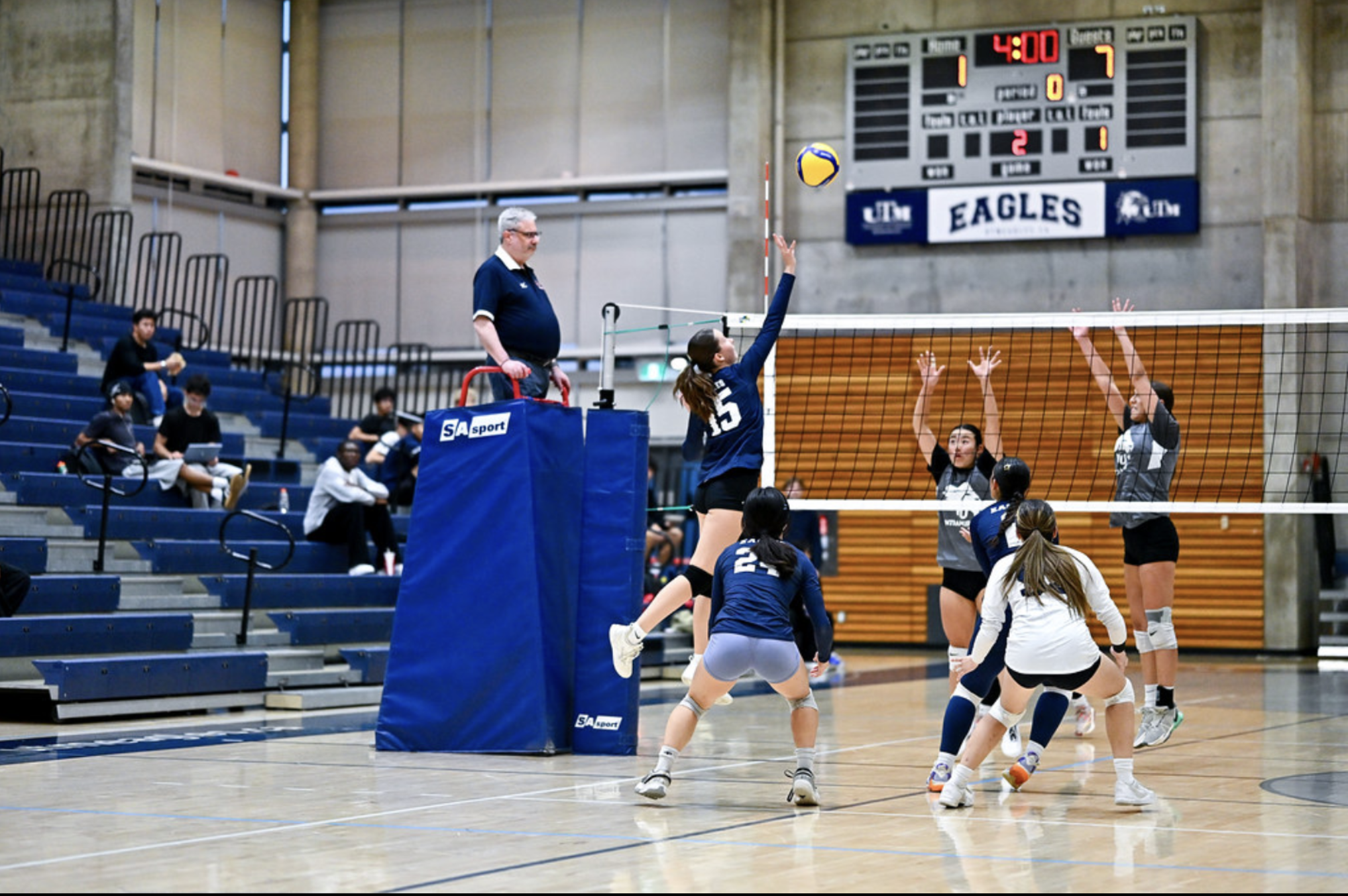
UTM has all of the resources and facilities to support a stronger sports culture, yet the bleachers at tri-campus sporting events are often filled by parents and friends of the players. Students with no personal connection to the team typically don’t choose to stop by.
UTM offers men’s and women’s sports teams for basketball, volleyball, soccer, ice hockey, cricket, and a mixed ultimate frisbee team. So there are plenty of opportunities to support UTM athletics. So why aren’t more students attending?
Bringing back Varsity could introduce stronger competition, but would not necessarily improve student engagement. Instead, UTM should focus on strengthening its existing tri-campus program through more accessible game schedules, increased promotion, and additional competition against nearby colleges. To understand whether Varsity should return, it is important to distinguish it from the athletic opportunities currently available at UTM.
Varsity athletics involves intercollegiate competition against institutions outside the University of Toronto. The Varsity Blues compete through the Ontario University Athletics (OUA), while UTM previously operated its own varsity program through the Ontario College Athletics Association (OCAA).
Tri-campus athletics, on the other hand, provides structured competition between the three U of T campuses: UTM, St. George, and Scarborough, offering students opportunities to represent their campus at a different competitive level.
In April 2014, Wahl wrote on the UTM news page announcing that UTM would become the 30th member of the OCAA, introducing Varsity athletics for the academic year of 2014-2015. This initial program included cross country, badminton, men’s and women’s indoor and outdoor soccer, and men’s and women’s basketball. From UTM’s original announcement, the program was intended to provide students with greater access to competitive sports without requiring them to travel to other U of T campuses.
Between 2014 and 2020, UTM competed in the OCAA and experienced competitive successes, including appearances at provincial championships. The final season took place during the academic year of 2019-2020. The Covid-19 pandemic interrupted the season and then shut down all athletics due to the lockdown. When in person schooling came back, Varsity did not return with it.
Although the program achieved competitive success, it was not enough to make Varsity competition a worthwhile investment. Some athletes believe Varsity could improve recruitment, competition, and campus pride.
Dante Giovinazzo, a member of UTM’s men’s tri-campus basketball team, supports the Varsity’s return. He believes competing against outside institutions, such as Seneca College, could create more exciting rivalries and attract spectators who might not otherwise attend tri-campus games.
However, stronger competition does not automatically guarantee larger audiences. If students are unaware of upcoming games or unable to attend because of scheduling conflicts, changing the opponent may not change attendance.
One of the biggest obstacles to reintroducing Varsity athletics is the financial commitment required to operate a competitive program. Varsity athletics involves more than organizing games. Teams require coaching staff, equipment, uniforms, transportation, competition fees, and potentially student athletic therapy. UTM has all of these resources for the tri-campus programs but not to the same level that Varsity has. There would need to be a lot of scheduling changes with the RAWC and gym specifically. This would get in the way of students’ regular schedules of using the facilities just to try and prioritize the varsity athletes.
Aidan Sham, a member of UTM’s men’s tri-campus volleyball team for five years, opposes Varsity’s return. “Between the limited funding and gym spaces, I don’t think Varsity sports should come back to UTM,” Sham said. Sham explained that his team has struggled to improve with only one practice each week. “The dedication is always there to train more, but we have never been granted the request,” Sham said. Players have even resorted to paying for external gym spaces to obtain additional practice time.
Another concern is student engagement. As a widely-recognized commuter campus, UTM faces challenges encouraging students to attend sporting events outside their academic schedules. Students who have already travelled home may be reluctant to return on Sundays for tri-campus competitions. This is reflected in the experience of UTM’s women’s tri-campus volleyball team, where spectators are often friends and family. Weekday exhibition games, however, have provided opportunities to attract students already on campus.
Kai Filmer, a UTM student who is unfamiliar with the athletic scene and has never attended a tri-campus game, suggests a greater outreach and online recognition of athletes to increase attention. “I just never hear anything about them,” Filmer said when discussing upcoming games. Even though the UTM Sports Instagram account posts all the upcoming news for the tricampus upcoming games, this suggests that these posts may not be reaching students outside of the athletics community.
Filmer’s perspective highlights a problem that Varsity alone cannot solve: students cannot support teams they do not know are playing. If UTM struggles to attract spectators regularly, why assume (re)introducing Varsity would automatically solve that problem?
There is also a problem with competitive development. Building a Varsity program would require recruiting athletes prepared to compete at a higher level. Simply converting existing tri-campus teams into Varsity teams would not guarantee that they are ready for that transition. Rather than investing in another level of competition, UTM should focus its energy in improving the tri-campus program. Strengthening existing teams will likely allow the university to help out the current athletes while creating more opportunities for student engagement. A better alternative to Varsity would be strengthening the tri-campus program.
This could start with moving games to weekdays rather than Sundays. This change in scheduling has been discussed between the full time staff for tri-campus, but is more a long-term fix due to the St. George campus not having the time or space for weekday games. If the schedule for game days does change, it is reasonable to assume that fan attendance would grow since it is easier for students to attend when they are already on campus.
When asked, Sham agreed, explaining that weekday games could receive greater exposure and attract more spectators.
Just imagine finishing your classes and walking to the bus loop, gym, or the parking lot, and hearing cheering from the gym. This would improve the atmosphere at UTM, especially when the winter comes and students stop coming to campus. There should be a reason to keep you on campus and cheer for your team.
Another option would be to introduce more exhibition games against colleges nearby. We already have tri-campus exhibition games, usually once a semester, and the OCR tournaments where other colleges come and play UTM tri-campus teams in a one-day tournament at the RAWC. Bringing in colleges brings new competition and more opportunities for students to come and support the tri-campus teams and get a feel for how competitive the level is.
UTM should not try to bring back Varsity from the dead because we are building something better and more fitting for the university campus we go to. We cannot simply resurrect Varsity from the dead, especially when we are unprepared, simply because it’s the Halloween season!
UTM does not need a big rivalry against another school to increase fan attendance and student engagement at games, we just need matches to be more accessible for students to attend.
Varsity may remain buried, but UTM’s school spirit doesn’t have to be.
*AI-Generated Audio Transcription Disclaimer
The audio transcription included in this article was generated using artificial intelligence (AI) technology with the purpose of improving accessibility for our readers and providing an alternative opportunity to engage with The Medium‘s content. Please note that AI-generated transcriptions may contain errors or inaccuracies in pronunciation, wording, or interpretation.
The original written article remains the authoritative version of the content. If you notice an error in the audio transcription, please contact social@themedium.ca so we can conduct further reviews and corrections.