
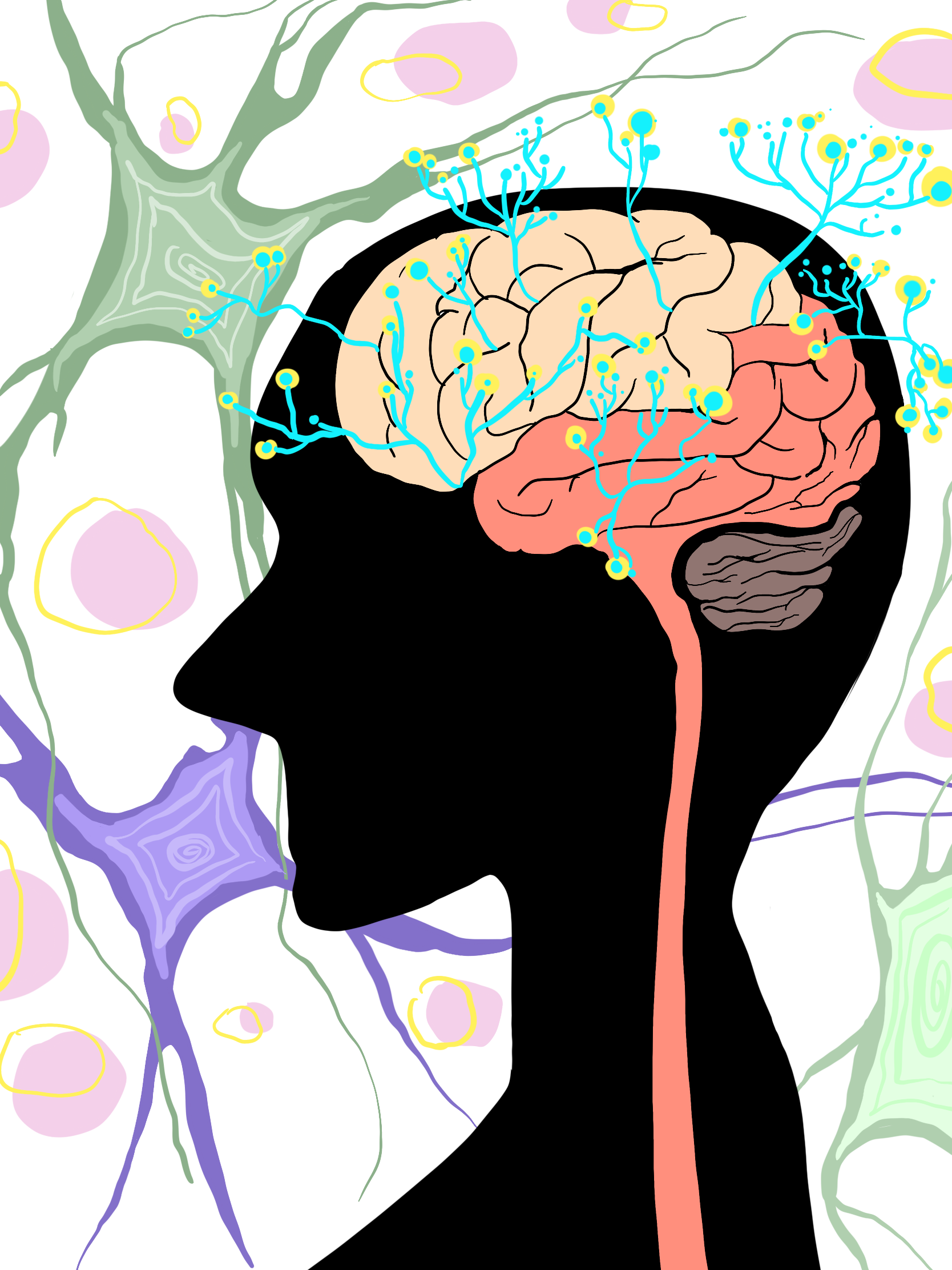
The effects of neurogenesis in depression
New research breaks down how the development of neurons can affect depressed individuals.
Listen to the audio version of this article here!*
What is depression? Defined by Cleveland Clinic, depression is a mental health condition that negatively affects an individual’s life, “a mood disorder,” that affects an individual’s function and thoughts. Depression—which varies from one person to another—often invokes individuals to lose interest in their passions, feel physically tired throughout the day, and causes lags in thinking or decision-making processes.
Recent research suggests that 37 per cent of university students cited moderate to severe depressive symptoms, with 18 per cent confirming severe depression. The medical condition is often caused by various factors; the chemical imbalance within the brain is almost always at the center of them all.
The two core brain regions researchers often refer to when discussing depression are the amygdala and hippocampus. According to Harvard Health Publishing, the amygdala is “associated with emotions such as anger, pleasure, sorrow, fear, and sexual arousal.” Individuals who are clinically depressed tend to trigger higher activities in this region, which can enlarge it and worsen their condition.
On the other hand, the hippocampus shrinks as an individual’s depression worsens, which can affect how they process their emotions, movements, memorization, and thinking; all critical elements to functioning at university and beyond.
What does recent research suggest about depression?
Before a person is born, 100 billion neurons are produced in the brain. These neurons are instrumental to an individual’s growth over time. Within the hippocampus, they play a key role in processing emotions and separating memories. Therefore, when a student with depression tries to distinguish between two different memories it may not just be the chemical imbalance in their brain that’s causing it.
Researchers from Columbia University’s Vagelos College of Physicians and Surgeons have discovered that neurogenesis, which is the process of generating new neurons, stalls in depressed individuals. On average, a healthy adult brain will generate new neurons in the hippocampus, one of the few areas in the brain capable of doing so, to help them adapt in unfamiliar or unexpected situations. During depression, however, developing neuron cells will remain at the early neural stem-cell stage without proceeding to the developmental pathway. This implies that new neuron cells are produced, but do not continue to develop, simply staying in the hippocampus without any progress. When this happens, individuals struggle to process emotions or adapt when required to do so.
Although the hippocampus isn’t the sole region that falls victim to depression, the healthiness of this area also determines how individuals interpret a stored memory. More often than not, depressed individuals fail to distinguish between the positive and negative emotions of a memory, and only recognize the negative. This is also known as impaired pattern separation. Researchers have now been able to attribute this impairment to the failure of new neurons from developing.
Students can now be assured that their struggles to adapt or differentiate between their memories isn’t a failure on their part as humans, but rather a warning sign from their brain to seek help.
UTM is here to help
Thankfully, the University of Toronto Mississauga (UTM) provides various mental health services, from one-on-one counseling to group therapy.
Although every counselling experience will differ from one student to another, the services do offer value. Yashwitha Chintapalli, a UTM student who previously attended the Wellness Den’s group therapy, spoke about her experience. “The group therapy workshops are more educational than anything [because they] teach different…coping methods,” she shared. “I think the experience of connecting to other people going through something similar to you, and working together to grow, made the experience valuable in my mind.”
What does this mean for the future?
As researchers continue to dive deep into the implications of this discovery, they are more confident than ever in the ability of research to broaden patient treatments. As one researcher mentioned, “classifying cancers based on their cellular characteristics, not their locations, has led to new and improved treatments. We hope the same will be true for depression and other psychiatric or brain diseases.”
*AI-Generated Audio Transcription Disclaimer
The audio transcription included in this article was generated using artificial intelligence (AI) technology with the purpose of improving accessibility for our readers and providing an alternative opportunity to engage with The Medium‘s content. Please note that AI-generated transcriptions may contain errors or inaccuracies in pronunciation, wording, or interpretation.
The original written article remains the authoritative version of the content. If you notice an error in the audio transcription, please contact social@themedium.ca so we can conduct further reviews and corrections.