
UTM declines academic amnesty for students amid UTMSU OSAP and tuition protest
The Union says it will keep pushing after the November 5 walkout—part of a province-wide student movement against Ontario’s student aid changes and rising tuition.
Listen to the audio version of this article here!*
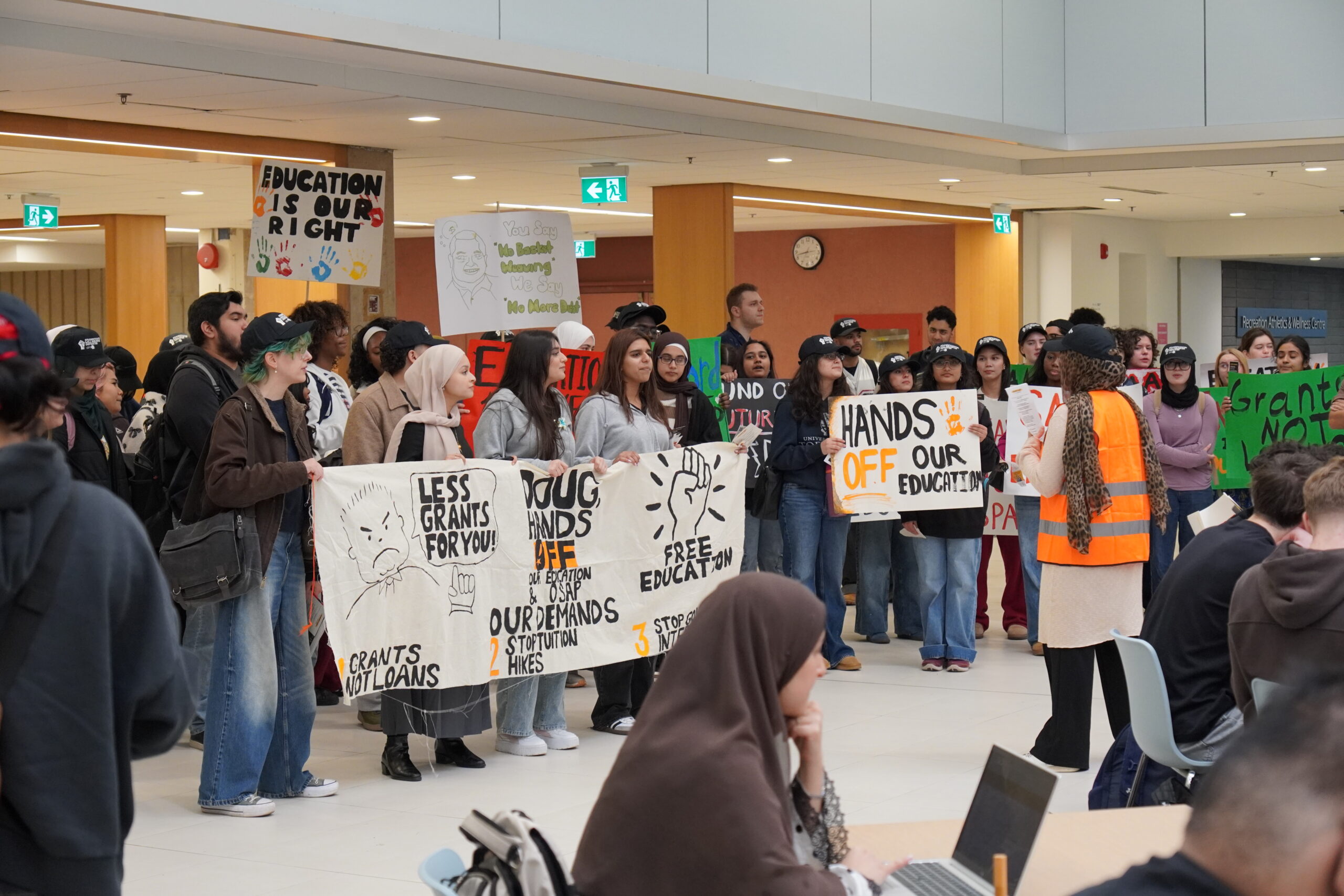
On November 5, the UTMSU held a student walkout to protest the Ontario government’s cuts to the Ontario Student Assistance Program (OSAP) and rising university tuition fees. UTM administration denied academic amnesty to students upon request.
The walkout was part of a province-wide student movement calling for greater accessibility to post-secondary education. In an announcement on Instagram, the UTMSU stated, “We stand in solidarity with the provincial student walkouts taking place on November 5, 2026.”
The walkout took place during UTMSU’s Week of Expressions Against Oppressions. Alongside the demonstrations, the union also hosted its first five-dollar meal deal of the academic year at the Student Centre, as part of its hunger alleviation initiative aimed at addressing food insecurity among students.
Request for academic amnesty denied
UTMSU President Adam El-Falou explained in an interview, “The initial goal was that every campus would be doing this walkout to get academic amnesty, approved universally on their campuses.”
Academic amnesty would let students miss classes to take part in the walkout without academic penalty. UTMSU appealed to the administration of UTM, but was told it was not possible due to the number of people that would be affected.
“They responded that because U of T is so large, they can’t give something to individual faculty, since it would be unfair,” said El-Falou.
El-Falou said he knows that academic amnesty is possible because York University and McMaster University gave their students academic amnesty.
The provincial measures at the centre of the protest
In February this year, the province ended a seven-year tuition freeze and reduced the share of OSAP given as grants. This year, OSAP applicants can only receive a maximum of 25 per cent of funding as grants and at least 75 per cent as loans.
At U of T, tuition for Ontario residents rose by two per cent for the Fall 2026 term, in line with Ontario’s new Tuition Fee Framework, while out-of-province students face a five per cent hike. “The Province’s Tuition Fee Framework does not apply to students in self-funded programs (i.e. that do not receive provincial operating grants) and most international students,” according to the university.
El-Falou also questioned why the university is raising tuition, despite an increase in grant funding from the province.
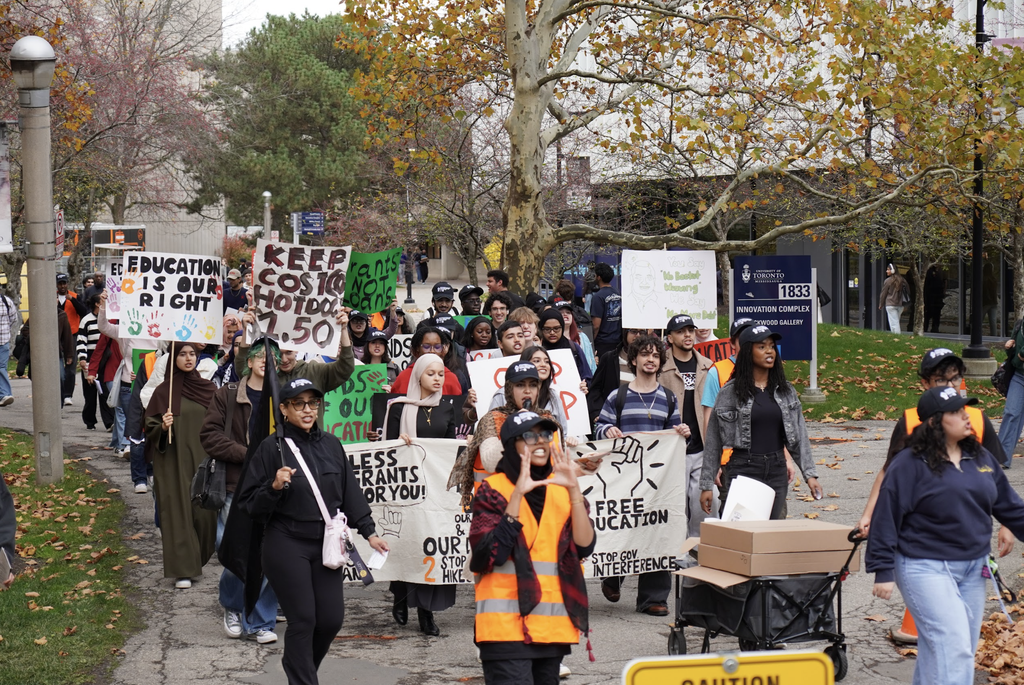
Photo provided by Arumitha Sasiharan
Students weigh in on rising costs and walkout turnout
UTMSU Vice-President Campus Life Lois Ogunnubi-Oriade said she was surprised by the level of engagement in the walkout, noting that many participants joined in the chants and rally.
In interviews with The Medium, some attendees said OSAP loans, cost of living expenses, and the increase in tuition made them feel like it is time for students’ voices to be heard.
El-Falou acknowledged that students have different circumstances that may affect their ability or willingness to participate in public demonstrations, particularly international students who may have concerns about their immigration status.
“The most important thing is to show that we are united,” El-Falou said. He emphasized that the UTMSU also offers opportunities for students to contribute to campaigns without attending public demonstrations. “You can help behind the scenes, whether it’s painting the posters, organizing info sessions or infographics.”
Beyond tuition and OSAP, El-Falou argued that accessible education must also account for the broader financial pressures students face, including housing, transportation, and the cost of living.
The walkout was intended to demonstrate collective opposition to policies that student organizers argue are making post-secondary education increasingly unaffordable.
“I think it was a great success, and it’s only the first step,” El-Falou concluded.
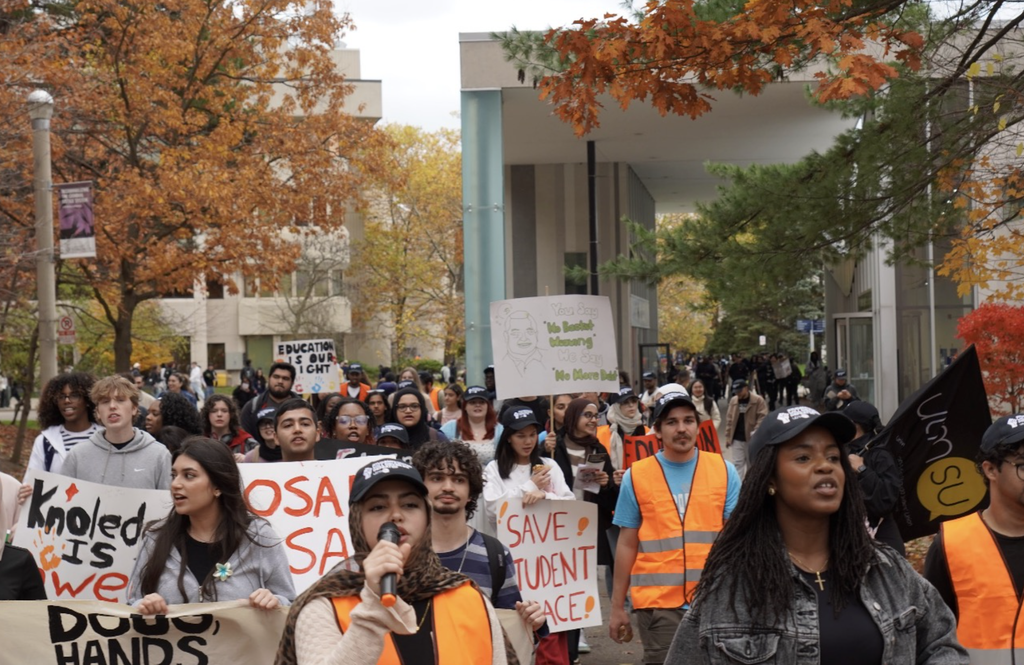
Photo provided by Arumitha Sasiharan
Police presence draws criticism
The presence of Peel Regional Police at the demonstration also drew criticism from the UTMSU president. When asked whether organizers faced opposition, he said the event had otherwise proceeded well, but expressed frustration with the police on campus.
“It’s a shame that Peel police had to show their face and put our students in distress,” he said.
El-Falou noted that the movement will continue beyond the November 5 walkout.
*AI-Generated Audio Transcription Disclaimer
The audio transcription included in this article was generated using artificial intelligence (AI) technology with the purpose of improving accessibility for our readers and providing an alternative opportunity to engage with The Medium‘s content. Please note that AI-generated transcriptions may contain errors or inaccuracies in pronunciation, wording, or interpretation.
The original written article remains the authoritative version of the content. If you notice an error in the audio transcription, please contact social@themedium.ca so we can conduct further reviews and corrections.