I owe my parents a future, not a career
Choosing a degree can honour our parents’ sacrifices, even when the path surprises them.
Listen to the audio version of this article here!*
You can be grateful for a life and still be unsure what to do with it. Choosing a degree can bring that uncertainty close. You want to do something you care about. You also want to name a profession and ease your parents’ anxieties. It would be good to give something back to them.
There is pleasure in hearing them share your good news—a mark you barely mentioned becomes something they tell a relative about. You can hear the pride in their voice from the next room. For a little while, you feel better about the semester, too. In a family where immigration meant rebuilding a new life from scratch, that pride may reach back farther than I thought. My parents remember the life they left. They remember needing work when they arrived. By the time I began choosing courses for my degree—brick by brick, laying down what would become the foundations of my potential career—my parents had spent years picturing where those courses would take me.
A familiar degree helps them picture it. A steady job. A home you can afford to keep. Many of our parents may have been robbed of the chance to study and build desirable careers due to financial, economic, and even cultural circumstances, which had led them to think that higher-level education is not something one could afford to get “wrong”. Our parents learned to see what an education would secure once the right sacrifices were made. Years later, their child’s degree can feel like the point at which those sacrifices will finally have been worth it. When my parents ask what I will do with a different qualification, I may hear a lack of faith or a confused, questioning look. It is hard to argue with a fear you understand.
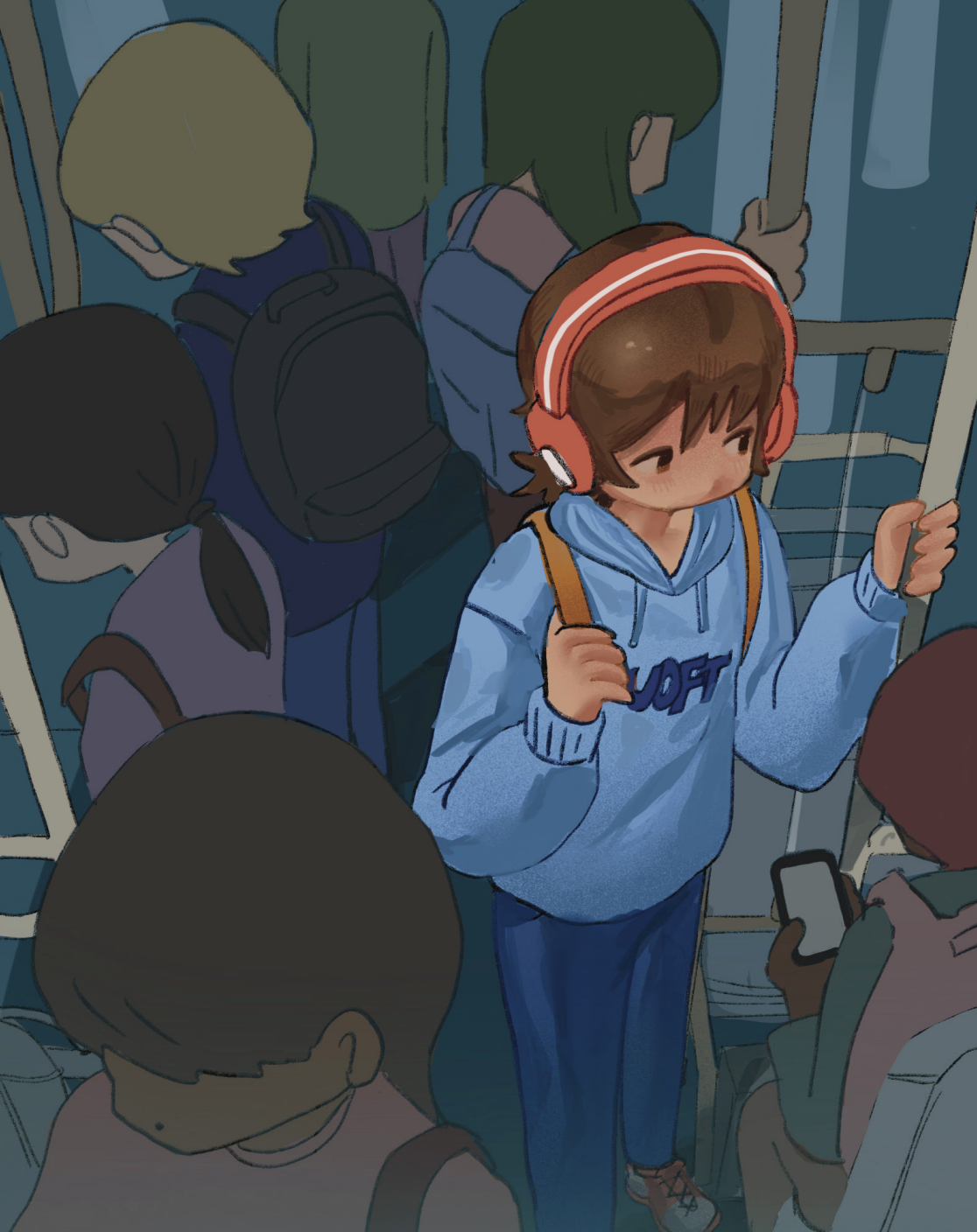
But then there is the course you took because it fit your timetable. You read past the assigned pages. Later, on the bus, you are still thinking about something said in class. You had not planned to care this much: can a subject give you words for something you have felt for years? How can it change the questions you ask, even the person you imagine becoming? Explaining it only through a possible salary leaves much unsaid. Yet sometimes, that is the only explanation that seems to count at home.
For many children of immigrants, such as myself, navigating the tension between my parents’ expectations and my own curiosities means looking at programs on Acorn before mentioning them to anyone—doing hours of research on these new courses and where they could take you. You want to know enough to answer the questions and looks that you anticipate. Perhaps you also want a few days to savour the thought before having to explain it. But I think what most children of immigrants get wrong is that committing to a different, perhaps unexpected program choice or even career interest doesn’t mean I have forgotten what my parents did to get me here.
There is the hope of giving something back. Being able to book their flight home. Having enough left at the end of the month to financially support them. A reliable income afforded to us by a stable degree choice can mean a greater deal than a salary on a job posting. For some students, that hope is part of what they want from their work. For others, it becomes difficult to separate from the fear of letting someone down. Both feelings can keep you at a desk late into the night.
I find it hard to tell where gratitude ends and obligation begins. Wanting our parents to be proud is not something we simply outgrow. Even when we know what we want, we may still wish they had wanted it for us first. And sometimes their questions catch something we missed. Loving a subject tells us little about how we will pay for another year of study. An interest can be real and the plan for it unfinished. It hurts to admit that when we have worked so hard to sound certain.
Our parents may have their own difficulties with certainty. They want a better life for us. What that life looks like can become less clear as we grow into it. To someone who worries about paying the bills, having enough may already feel like freedom. Their child hopes to have enough and enjoy the work that earns it. The difference can be small when spoken aloud. It becomes larger when there is a degree to choose.
Yet the chance to think about enjoyment may be part of what our parents made possible. There is enough room in our lives to consider more than getting by. We have options. We do not always know what to do with them. I feel grateful for that room, even for the uncertainty it allows. Finding a way through may mean discussing money without making it the whole conversation. It can mean showing our parents what we are learning while admitting what we have not worked out. Their approval may take time. The choices cannot always wait for it.
Immigrant children are often taught to understand their futures through a language of debt: my parents sacrificed for me, so I owe them success. But responsibility to one’s family does not require reproducing its ambitions? I believe that someone who studies literature, sociology, or journalism is not necessarily rejecting the promise of upward mobility our parents wanted for us. Rather, they may be redefining what a worthwhile future looks actually like—one that prioritizes intellectual curiosity, social contribution, creative freedom, or the pursuit of justice alongside financial and economic stability.
But at the same time, this does not mean dismissing the very real and sometimes heartbreaking realities and struggles that shaped our parents’ expectations. I think it means refusing the assumptions that only a narrow set of degrees and professions can justify the sacrifices of their immigration in the first place.
For children of immigrants, choosing a university degree is rarely just a matter of choosing what we love. It is a negotiation between the lives our parents imagined for us and the lives we are only beginning to imagine for ourselves. Behind every question about what we want to study lies a more complicated one: what do we owe the people who sacrificed so much to give us the freedom to choose?
In immigrant families, where education can represent security and the promise of a better life, pursuing an unconventional path can feel less like an act of independence and more like a rejection of everything our parents worked toward. But perhaps we have misunderstood what it means to honour their sacrifices. We do not honour our parents by reproducing their expectations. We honour them by exercising the very freedom they sacrificed to give us—even when that freedom leads us somewhere they never expected.
A parent’s worry may take longer to ease than a student’s decision. There may still be questions over dinner. But perhaps, after a while, they might ask about an assignment because they want to know what we are learning. We tell them. This time, we do not begin with its prospects for employment. The degree may be unfamiliar to them, the person studying it will not be. The care we take with our work, the wish to be useful to someone—they may recognize where those things came from. I hope there is pride in that, too. Enough that we can tell them about the life we are building without feeling we must first apologize for its shape.
*AI-Generated Audio Transcription Disclaimer
The audio transcription included in this article was generated using artificial intelligence (AI) technology with the purpose of improving accessibility for our readers and providing an alternative opportunity to engage with The Medium‘s content. Please note that AI-generated transcriptions may contain errors or inaccuracies in pronunciation, wording, or interpretation.
The original written article remains the authoritative version of the content. If you notice an error in the audio transcription, please contact social@themedium.ca so we can conduct further reviews and corrections.