
A strong and inclusive campus life shouldn’t require living on campus
Maybe the problem isn’t that commuter students are less immersed—it's that we have created a very narrow definition of what immersion is supposed to look like.
Listen to the audio version of this article here!*
“I used to hike 80 kilometers to school when I was your age. Uphill. Both ways. In the snow. Barefoot. Across the seven seas. Through the Sahara,” or some variation of this might have been told by your parents once. Every generation seems to have had a harder time getting to school than the previous one, for whatever reason. Generally speaking, the message is the same regardless of context: you should be appreciative of how convenient your life is in 2026.
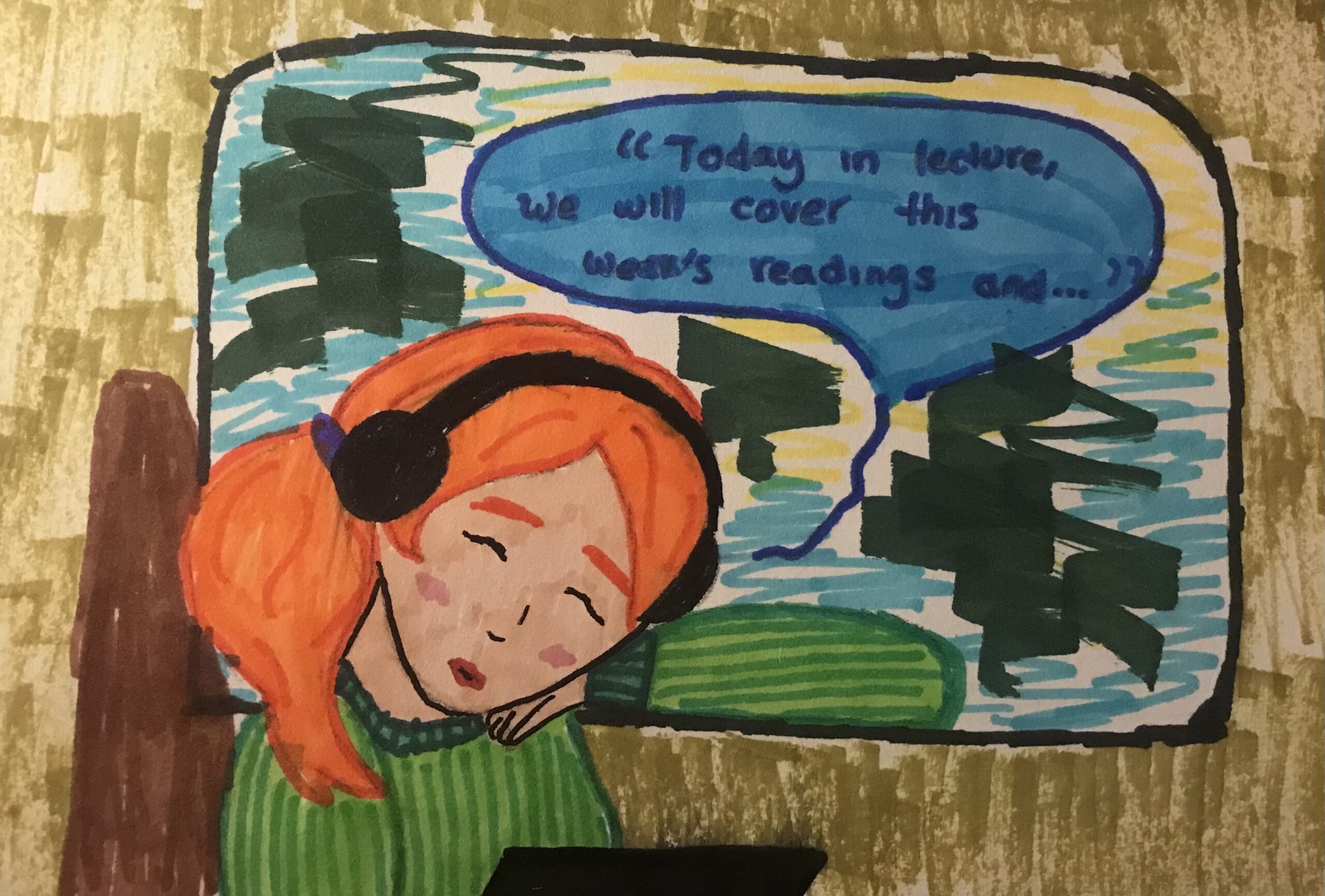
Although it takes about two hours of my day, my commute to UTM is by no means a trip across the seven seas. I take many buses to get to university once I leave my house. By the time I get back home, a significant part of my day has been spent commuting, jumping from one mode of transportation to another. However, contrary to popular belief, I don’t always consider my commute to be a strain. In fact, it is sometimes the only time of day I can do nothing but listen to music and dissociate from the world. Before I get home, my two-hour commute allows me to emotionally leave the campus-world behind.
Living away from campus has its benefits. There is value in taking two hours for yourself before going back to your responsibilities. Additionally, there is value in being able to engage with the university without making it the focal point of your entire day. There are aspects of commuting that are both positive and negative. It can be exhausting, expensive, and restrictive but it can also give students something university usually lacks: distance.
Why do we frequently treat commuting as something that fundamentally worsens the academic experience when it may be both important and exhausting? A recent study from the Ted Rogers School of Management at Toronto Metropolitan University explores the implications of students’ commutes on their academic and social experience. According to the study, students who live on campus typically tend to do better academically than those who commute. Additionally, the researchers discovered that students who commute have a “much less immersive university experience,” with fewer friends and less social interactions.
The results are worth taking seriously. However, I was drawn to the word “immersive.” What does the term “immersive university experience” really mean? Does a longer stay on campus instantly equate to a better one? When we try to imagine an immersive university experience, the first thing people tend to picture is a student who lives in residence. They get up close to campus, go to class, study with friends, grab food after lecture or tutorial, and spend their evenings at an event. Both their personal and academic lives take place in the same location.
A commuter’s boundaries are different. Commuters like myself go to class, stay on campus for a while, and then leave. Some of us might show up to lecture and leave immediately afterwards because we’d rather study or eat at home. For commuters, there is an undeniable physical distance between the university and their home. However, UTM’s reputation as a commuter school often does a disservice to us, commuter students, in that we are sometimes portrayed as emotionally distant simply because of how long the commute home is. At the end of the day, a student may have desires to return home even though they care about their education, have friends on campus, are involved in club life, and continue to contribute to campus life.
In actuality, the narrative of isolation we place on commuter students may have some value. It’s easy for university to become an environment that follows students everywhere—exams, clubs, assignments, and responsibilities can all be found in one place. The ride home allows commuters to take a natural break between all the “locking in” they have to do. The bus ride may represent a change from being a student to just being at home.
However, this is the point at which the issue becomes multifaceted. Even though commuting can be healthy, it can, nonetheless, make university harder to participate in. The hidden costs of commuting isn’t only measured in time, distance, and price. It’s also measured in decisions and invisible labour. The question, “When will I get home?” can follow students at every event, every study session, and every office hour. Will there be a way for me to return home? Is it worthwhile to extend an already exhausting day by an additional hour? If a resident stays on campus for an additional two hours, they only have to walk back to their room. For a commuter, that means an entire reshaping of the day. From the outside, a seemingly insignificant choice may end up costing a lot more.
This could also contribute to the explanation of why students who commute may have fewer socialization opportunities. It is easy to assume that commuters who engage in less social contact don’t want to interact with others. It’s a convenient and often disrespectful narrative that commuter students make our campus less lively and engaging simply because of our commuter tendencies. Yet, there is a difference between desiring to engage and being able to do so with ease. Everyone agrees to hang out after a club meeting, but for me, the extra time spent socializing after events or a lecture means less time spent with my family at home, or walking back home late at night, especially in the gruelling winter months.
Therefore, interest isn’t always what separates the energies for commuter versus non-commuter students. The simple answer is that commuters made the decisions to commute. If they’d want, they can stay later. Like everyone else, they can go to events, join clubs, and make friends, which is completely accurate. But not everyone has equal access to something just because they simply can do it. Although it is technically possible for a commuter to stay on campus for an evening event from 5 p.m. to 7 p.m.—a time slot in which a lot of our campus events are scheduled for—doing so may result in a later return home, less sleep, increased expenses, or a loss of time for employment, family, or other obligations. There is an option, but it comes at a different expense.
Convincing commuters to spend more time on campus is not the answer, in my opinion. Instead, UTM should facilitate participation in campus life while taking into account the realities of commuting for the vast majority of students. Working towards a more commuter-friendly campus could entail providing additional events during the times when commuters are already on campus, allowing students ample time to make travel arrangements, and setting up areas where commuters can relax in between lectures. More importantly, when student participation is discussed, commuters should be one of the first demographics taken into account.
Being physically present, arriving late on campus, residing close to other students, attending events, and being ready for spontaneous plans with friends are all a part of the quintessential campus experience. Yet, we rarely stop and ask what hidden burdens these expectations of immersion can cost to commuters—especially those trying to balance campus, work, friends, family, and their own health?
The fact that commuters leave campus is not the issue. The issue arises when leaving campus also results in losing access to the aspects of university life that take place there.
UTM shouldn’t convince commuters that staying on campus for as long as possible is the best university experience. Instead, it should pose the question, “What would an immersive university experience look like if it didn’t require students to live inside it?”
The issue is not commuting. It is a university experience tailored to those who do not commute.
*AI-Generated Audio Transcription Disclaimer
The audio transcription included in this article was generated using artificial intelligence (AI) technology with the purpose of improving accessibility for our readers and providing an alternative opportunity to engage with The Medium‘s content. Please note that AI-generated transcriptions may contain errors or inaccuracies in pronunciation, wording, or interpretation.
The original written article remains the authoritative version of the content. If you notice an error in the audio transcription, please contact social@themedium.ca so we can conduct further reviews and corrections.