
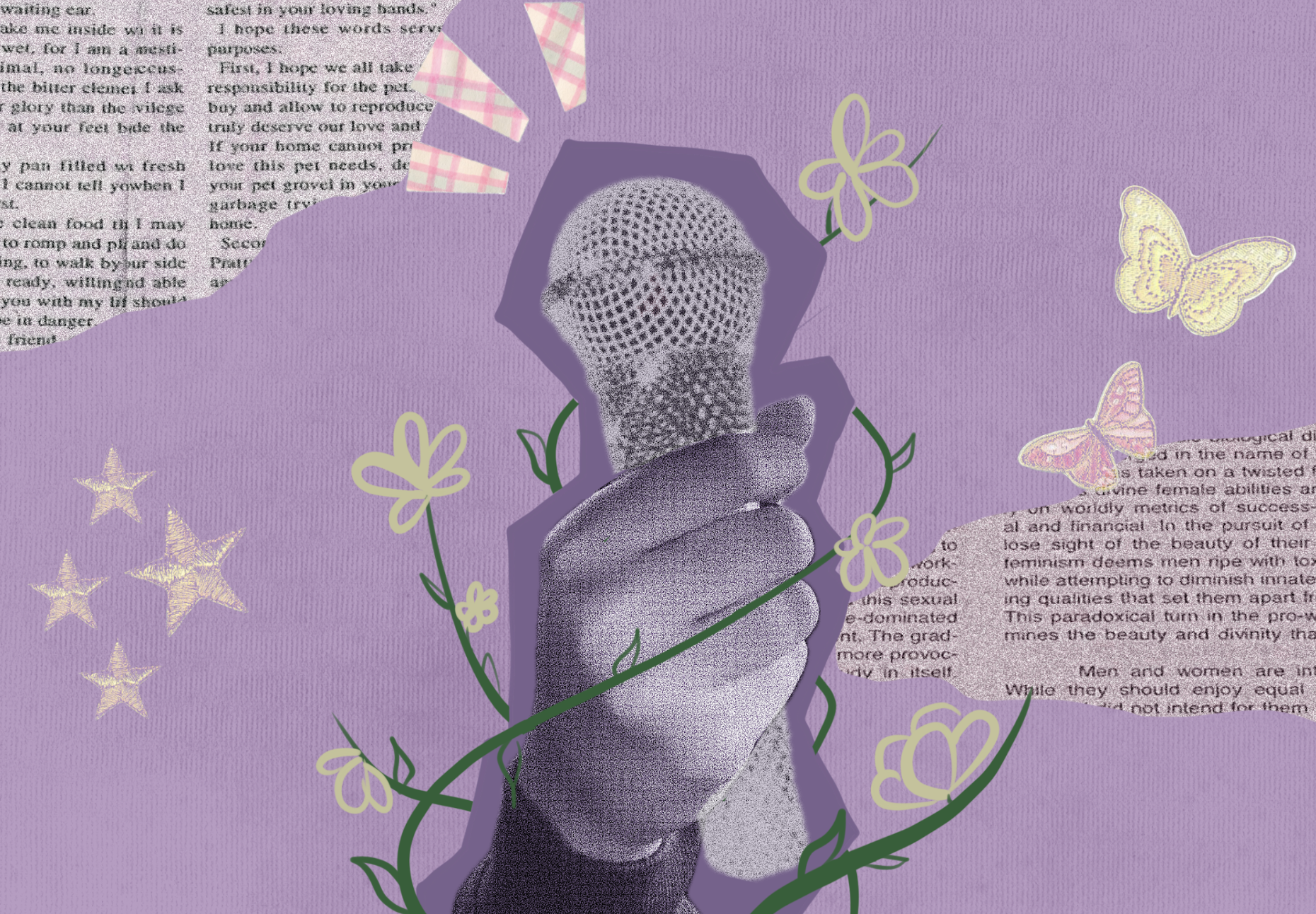
Womanhood can be political and joyful—and Olivia Rodrigo isn’t afraid to embrace either
Rodrigo’s Daisy Chain Fields festival breaks the neoliberal blueprint for artist activism.
Listen to the audio version of this article here!*
On August 29, 2026, American singer and songwriter Olivia Rodrigo founded and organized the Daisy Chain Fields Festival, a single day music festival that took place in Irvine, California, and that featured an all-women lineup of artists. From Chappell Roan and Die Spitz to Stevie Nicks and my beloved Mitski, several women artists took to the stage to perform their hit songs in front of a crowd beaming and singing along with undeniable joy.
According to Rodrigo and the festival’s mission statement, Daisy Chain Fields affirms “that music and collective experience can serve as enduring drivers of progress and social change. It’s a place where inspiration and curiosity lead to knowledge, strength, and action.”
Over the course of the festival, Daisy Chain Fields raised $20 million for 10 non-profit organizations that focus on funding, organizing, and advocating for women’s health, education, and economic freedom. Some of these non-profits include the Centre for Reproductive Rights, a world-wide organization dedicated to advancing reproductive freedom; John Hopkins Centre for Indigenous Health, which brings together Indigenous knowledge and community wisdom to advance health equity; and the National Domestic Workers Alliance, a coalition which advocates for economic reforms, rights, and protections for all workers.
Like its forebear Lilith Fair, the all-day women-led celebration was inclusive, welcoming, and intimately in-touch with the social, economic, and political tribulations of our current times—especially at a time where much of the music industry feels disconnected from the realities facing communities across the globe.
But what makes this festival different? What makes Daisy Chain Fields so politically refreshing and culturally resonant in a world where artists constantly pull from their arsenal of industry-approved activism talking-points and tone-deaf, privileged statements?
For one, the non-profits partnerships directly support organizations, mutual-aid networks, and coalitions at a time when the Trump administration is actively defunding and attacking the freedoms and visibility of racialized women, disabled people, queer and immigrant communities, and even those who stand in solidarity. Violence and state surveillance of brown and black immigrants continue to soar, trans healthcare gains are eroding, those protesting genocide are being arrested on the streets, and women of colour continue to face disproportionate levels of violence and dehumanization—whether in their own homes, on the streets, or in hopsitals. Here in Canada, the same story unravels but in a slightly different font.
So, how exactly does a bunch of women and girls gathered together in an open field address the violence and pain of what it means to be a woman?
I think part of what made Daisy Chain Fields change the formula of how women are usually acknowledged in the music industry is that the festival’s philosophy itself sees women’s joy as a driver for political action, education, and liberation. Throughout history, the seriousness of women’s creative energy and output have been ignored or belittled in comparison to men’s. Our aesthetic presentation and choices continue to overshadow the real political change we create through our art.
I believe that art created and circulated by women and other gender diverse people are a form of radical world-making. Part of why I think the Daisy Chain Fields festival had the impact that it had—beyond the incredible non-profit partnerships—is because it let women center, celebrate, and share their joy when so much of the narratives we consume about ourselves focus on violence, trauma, and one-dimensional takes on what it means to inhabit womanhood.
Daisy Chain Fields makes space for the joy, the honest conversations about our shared political moment, and creates a forward-looking vision of liberation and resistance that feels at once original and a homage to the women artists who paved the way for political strength in the face of destructive governments and conditions.
This past September in New Jersey, American rapper Macklemore was removed from English singer-songwriter Ed Sheeran Loop Tour after Macklemore onstage “Free Palestine” statement. The pressure to remove Macklemore came after businessman and billionaire Robert Kraft—a pro-Israel businessman and billionare who has made significant donations to the Isreali Defence Forces (IDF) and Zionist lobby group American Israel Public Affairs Committee (AIPAC)—spoke to Ed Sheeran about the rapper’s sudden but unsurprising removal.
Macklemore has been a staunch supporter of Palestinian liberation, donating $1 million of his tour earnings to Palestinian aid organizations and even announced an independent tour. Since his removal, several other prominent artists expected to open for Sheeran’s tour, quit the tour in protest. Sheeran, on the other hand, continues to gaslight his fans and critics about his own non-complicity in all this, citing his steadfast commitment to remaining apolitical in a burning and breaking world.
In an 2024 Instagram post after the presidential debate between Kamala Harris and former President Donald Trump, mega-star Taylor Swift endorsed the democratic candidate, writing that “I’ve done my research, and I’ve made my choice. Your research is all yours to do, and the choice is yours to make.” In recent years, since her relationship with Travis Kelce and association with the right-wing, Swift has come under fire for her own hypocritical advocacy.
For the longest time, celebrities and artists justified their apolitical stances or sanitized statements with the belief that they are just one person in an ocean of complex political and social forces beyond their interpretation or comment. But even if Rodrigo and Macklemore are individuals, they have managed to up the standards and obligations of artists to speak out against all forms of oppression.
In the grand scheme of things, I don’t think what Rodrigo did was anything revolutionary—women artists have been speaking out about oppression and continue to be marginalized for it. But a star as huge as Rodrigo openly supporting reproductive freedoms and standing against state violence against women and girls is the wake-up call the industry needs to know that younger generations will not tolerate hypocritical activism any longer. That those who don’t have the gumption will be held accountable in the arena of public opinion. This is just the start.
*AI-Generated Audio Transcription Disclaimer
The audio transcription included in this article was generated using artificial intelligence (AI) technology with the purpose of improving accessibility for our readers and providing an alternative opportunity to engage with The Medium‘s content. Please note that AI-generated transcriptions may contain errors or inaccuracies in pronunciation, wording, or interpretation.
The original written article remains the authoritative version of the content. If you notice an error in the audio transcription, please contact social@themedium.ca so we can conduct further reviews and corrections.

Opinion Editor (Volume 51); Associate Opinion Editor (Volume 50) — Mashiyat (Mash) is a third-year student studying Neuroscience and Professional Writing and Communication (PWC). As this year’s Opinion Editor, Mash hopes to use her writing, editorial, and leadership skills in supporting student journalism in the essential role it plays in fostering intellectual freedom and artistic expression on campuses. When she’s not writing or slaving away at school, Mash uses her free time cooking cultural dishes, striking up conversations with strangers, and being anxious about her nebulous career plans. You can connect with Mash on her LinkedIn.